Meditative Walking: Meditate in Action!
An Integral Part of Zen Buddhism
Meditative walking, or kinhin, is a practice that forms an integral part of the soto Zen Buddhist tradition. This practice was revitalized in the 20th century by the Japanese Zen master Kodo Sawaki, who emphasized its importance in spiritual development.
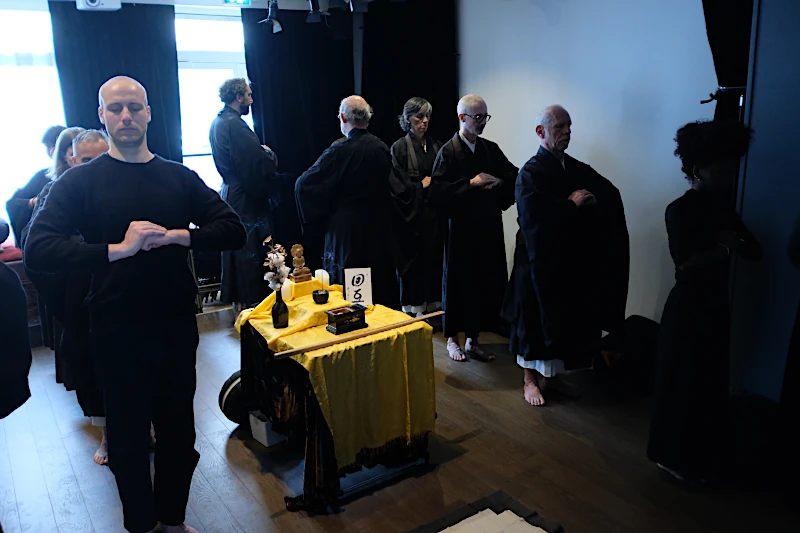
Practice of Zen meditative walking.
Posture in kinhin is not merely a matter of form, but also of function. It reflects the practitioner’s state of mind and their ability to remain centered in movement.
Master Kosen
Kinhin fosters mindfulness, mental stability, and presence in the moment. It also strengthens bodily awareness and the relationship between body and mind. This practice is a powerful complement to seated meditation in the soto Zen tradition. You can practice it alone to cultivate mindfulness in daily life.
Meditative Walking
This is a very slow and deliberate way of walking, performed between periods of seated meditation.
Practitioners stand in a meditative posture, their hands forming a specific mudra (hand position).
The group begins walking slowly and in synchrony. Breathing is deep and aligned with the rhythm of the walk. Practitioners lift their foot while inhaling and move it forward while exhaling slowly.
The distance between each practitioner remains consistent, and the walking pace is maintained steadily and slowly. The goal is not to reach a destination or move quickly, but rather to stay focused on each step.
As a rule, kinhin is practiced between two half-sessions of zazen. But the purpose is not simply to relax the legs or switch position when sitting back down! While kinhin had fallen into disuse over the years in Japan, Kodo Sawaki restored this meditative walk to its rightful place. The aim is to rediscover the same concentration in movement as in stillness.