There are several Zen dojos in Paris from the Deshimaru lineage. This one is Zen Paris, 50 rue Labat, Paris 18th — founded by Josy Genji Thibaut, Kosen Sangha. Welcome !
Zen and Feminism: Josy, Zazen, and the MLF
Are Zen and feminism compatible? According to the words of the greatest masters and the experience lived and transmitted by Zen nun and feminist activist Josy Thibaut, the answer is yes.
Zen and Feminism: Lived Practices
Josy (1925-2017), mother of Master Kosen Thibaut, was both an unwavering Zen practitioner and a seasoned feminist activist. For many years, she led a zazen group at her home, which was the origin of the Zen Paris dojo.
GRRRR-dream of Women

Banner GRRRR-dream of Women held during a demonstration. Call for a women’s strike, March 8, 2012 – Photo by Michel Viala
And why not a women’s strike? […] Ideas were flying. Josy Thibaut suggested writing it as
GRRRR-dream of Women.GRRRRfor anger anddreamfor a new world where women would no longer work for free and would not be underpaid in companies.My MLF – Marie-Jo Bonnet
When Women Love Each Other

Street collage: When women love each other, men reap nothing. Photo published on February 21, 2021, on the Twitter account @CollagesLesb
On May 1, 1976, we met at Jussieu University to prepare slogans for the demonstration, make banners, and organize our presence in the great workers’ march. […] Josy Thibaut, particularly inspired, came up with a wonderful slogan:
When women love each other, men reap nothing.My MLF – Marie-Jo Bonnet
Feminism in the MLF
After experiencing the post-war era in the jazz scene of Saint-Germain-des-Prés in Paris (when you arrived at the dojo she led at her home, you were often greeted by a Louis Armstrong tune), Josy Thibaut returned to her studies at the Sorbonne in… 1967. This was just before the burst of energy in May 68, in which she fully participated.
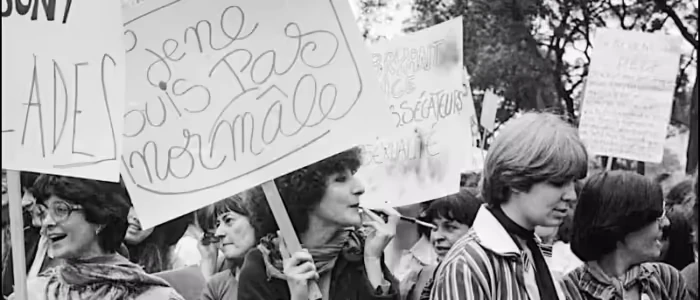
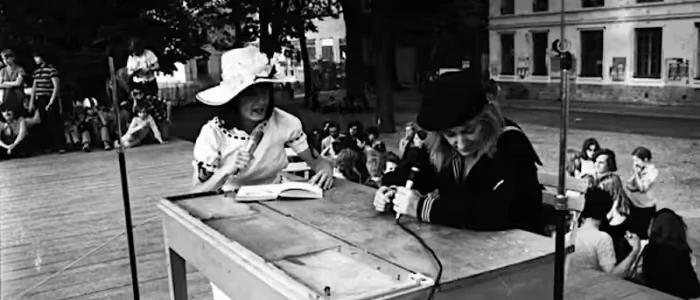
She joined the Women’s Liberation Movement (MLF) at the beginning of 1971, a few months after the movement’s first public appearances. As a signatory of the Manifesto of the 343, she impressed her younger fellow activists with her humor, energy, and imagination.


Zen with Masters Deshimaru and Kosen
In 1978, when her son met Master Deshimaru, she too began practicing zazen.
After being ordained as a Zen nun by her son, who had become a master, she continued zazen relentlessly and led a small dojo at her home.
Feminist Songs

Cover of the feminist magazine Le torchon brûle No. 3, November 1972.
I met Sensei through my son Stéphane Kosen. I wasn’t in a hurry to practice. I was part of a very active feminist group, and we were fighting against the patriarchy. So, Zen patriarchs didn’t interest me.
Little by little, I saw that Stéphane was changing, and that encouraged me to come. I started practicing in the summer of 1978 during the Val-d’Isère sesshin. I’ve always had a strong spirit of provocation. To express it, I wrote skits and songs [to the tune of La mauvaise réputation by Brassens]:
What Master Dogen said,
Do they apply it on rue Pernety?
Man and woman equal to each other,
At the Paris dojo, it’s nothing!
Sensei took it very badly.
The following year, I thought: I’ll do another sesshin, let’s try the experience again.
I had also prepared a song [to the tune of La Parisienne by Marie-Paule Belle] that went:
I’m not yet a nun, they’re surprised, they’re surprised,
I’m not a bodhisattva, they say it won’t do!
I don’t have a rakusu, I don’t care, I don’t care,
But I’m mushotoku, and I am to the core!
I don’t have satori, so be it, so be it!
And Sensei took it with a smile.
Interview with Josy Thibaut by Ko Ei in 2017
You’re crazy!

Taisen Deshimaru
At the Val-d’Isère sesshin, I asked to speak during the first mondo. Sensei and I started arguing. He told me: Leave!
I replied: I’m not leaving, I paid!
Nevertheless, I continued practicing in Paris. Gradually, our relationship softened.
Josy Thibaut: Regarding what happened this morning with the sick woman…
Master Deshimaru: Yes, madam?
Josy (sharply): She was asking for help! She was asking for love! Yet you sent her away from the dojo immediately! Does the sangha exclude people like that?
Master Deshimaru: If one person disturbs two hundred others, they must be made to leave. She needs to go to the hospital.
Josy: I understand! It’s the way, I mean, the way!
Master Deshimaru (tapping his temple with his index finger): You’re a bit like her too! […]
Josy: You didn’t do anything for her!
Master Deshimaru: We consulted her father and her doctor. I must first take care of my normal disciples. Not the crazy ones. A dojo is a sacred place, not a hospital… When your son came to the Paris dojo (the master points to his disciple Stéphane Kosen), you were always shouting at me and criticizing me. But then you were struck by how your son had changed. You came here and were impressed, but not completely. The madwoman influenced you, and now you’re a bit mad too.
Mondo of July 27, 1978 – Cited by Philippe Coupey – Sit: Zen Teachings of Master Taisen Deshimaru – [Translated from English by the author]
Continue zazen

Hand posture in zazen.
I remember the first time my mother, Josy, came to practice zazen with Master Deshimaru. At that time, my mother criticized Master Deshimaru a lot: That guy, he took my son!
My mother had performed a feminist sketch at the summer camp festival in Val-d’Isère.
Then Sensei said: I don’t want feminism in Zen; everyone must be the same. Men and women must be in good harmony; I don’t want separation.
During the sesshin, there was a woman who was mentally unstable. She had woken everyone up during the night. Suddenly, during zazen, she stood up and started screaming violently.
Then Sensei said: We must call an ambulance; she needs to go to the hospital.
Later, there was a mondo. My mother asked a question. Very aggressively, she was always asking Master Deshimaru questions: Sensei, you say this is Buddhism, and that we must have compassion. Why are you sending this girl to a psychiatric hospital? On the contrary, we should all take care of her.
Sensei replied: Don’t you understand? Then you must go to the hospital too. Besides, if your son hadn’t followed my teaching, he would be completely mad today. It’s me who saved your son. You’re a bad educator. You must leave; you’re crazy. You don’t understand that it’s stupid to disturb an entire sangha because of one sick person. Afterward, everyone becomes mad.
Later, he told her: I don’t want to be your master. I don’t want to educate you. Instead, become your son’s disciple.
Afterward, my mother changed her mind about Master Deshimaru. She let go of her prejudices. She understood he was a master and began practicing zazen very seriously. She eventually declared: I would like to receive ordination from Master Deshimaru.
Unfortunately, Master Deshimaru passed away just as he was about to give her ordination. He only gave her a rakusu.
Master Kosen - August 2001
Josy began zazen after the age of 50, perhaps initially more to see what her son—the future Master Kosen Thibaut—had gotten into than out of personal seeking.
Deeply committed to the practice, she continues to sit zazen assiduously. She takes part in all the intensive practice periods, or sesshins, until nearly 90 years old, despite a hip replacement!
Masculine, feminine: bullshitin’
Is Josy Thibaut an exception in a Buddhist tradition that, more generally, would reject women? At least in the Mahayana tradition of Zen Buddhism—the Great Vehicle—this is not the case.
The Hinayana current, on the other hand, is more concerned with personal liberation than with the emancipation of all beings and generally denies women’s spiritual capacities.
No essence
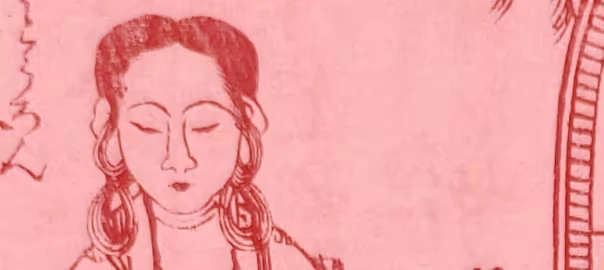
Hokusai - manga
In this passage from the Vimalakīrti Sutra, Śāriputra, a disciple of the Buddha, dialogues with a goddess. The divinity of the latter should be seen only as one condition of existence among others—including that of being human or animal—whose illusory nature zazen reveals.
Śāriputra: Why do you not change your sex?
The goddess: For twelve years, I have tried in vain to grasp the essence of femininity. What is there to change? If a magician conjured a phantom woman and someone asked her why she does not change her sex, would that question make sense?
Śāriputra: No. Phantoms have no fixed form, so what would there be to change?
The goddess: All things are the same. They have no fixed form. So what sense is there in asking me:
Why do you not change your sex?The goddess gives Śāriputra her appearance and takes on Śāriputra’s.
The goddess: Why do you not change your sex?
Śāriputra: I do not know how I have taken on a feminine form.
The goddess: If you can take on a feminine form, then all women can likewise change their form. Just as you are not truly a woman, though you appear as one, all women likewise appear as women but are not truly so. This is why the Buddha says that phenomena are neither masculine nor feminine.
The goddess restores Śāriputra to his original appearance.
The goddess: Where is your feminine form now?
Śāriputra: My feminine form has neither existence nor non-existence.
Vimalakīrti Sutra – [Translated from English by the author]
Non-fixity

Hokusai - The goddess Kannon riding a carp.
The bodhisattva Kannon, Avalokiteśvara, is depicted indiscriminately in masculine or feminine form (hence a small stylistic exercise in the free translation below).
The Buddha replied to the bodhisattva: Good man, if there are living beings who need a buddha’s incarnation to be saved, the bodhisattva Kannon immediately manifests in a buddha’s body and preaches the Dharma to them. […]
If they need a monk, a nun, a layman, or a laywoman, he preaches the Dharma to them. If they need the wife of a wealthy man, of a householder, a chief minister, or a brahmin, she immediately becomes those women and preaches the Dharma to them. If they need a young boy or a young girl, she preaches the Dharma in that form.
The bodhisattva Kannon has acquired such merits and, donning a multitude of different forms, she travels through the lands saving living beings.
Lotus Sutra – [Translated from English by the author]
Many Buddhist texts only allow women’s awakening after their reincarnation in a masculine form. But Zen attributes no inherent essence to anything. It sees everything as aggregates, results of unstable and ephemeral interactions. Thus, the most cherished sutras of this school are those that propose transcending the male/female duality, seen merely as the illusory opposition of arbitrary conditions.
The Buddha’s children should not be like this
The 13th century marks Japan’s entry into the military regime of the Kamakura shogunate. In 1223, the future great master Dogen, dissatisfied with his training in the Tendai school, travels to China to study Chan under Master Nyojo.
The Tendai school had been founded by Dengyo Daishi during Japan’s antiquity. Text-bound, tinged with Confucianism, and closely aligned with power, it was the dominant branch of Buddhism in Japan before the rise of Zen. Hostile toward women and more concerned with social prestige than spiritual emancipation, it could not address Dogen’s questions.
Exclusion

A sign reading Forbidden to women
near the Kyaiktiyo Pagoda.
Two lay stewards shall be appointed in this Tendai monastery to oversee it in turn and to prohibit entry to thieves, alcohol, and women. Thus, the Buddhist law will be respected and the nation safeguarded.
Dengyo Daishi - Rules for the Disciples of the School of Mount Hiei - September 818 - Cited by Mason and Caiger - A History of Japan - [Translated from English by the author]
Defilement
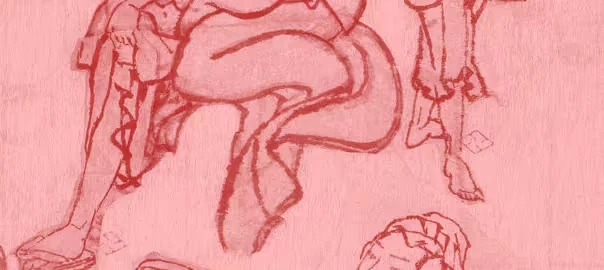
Hokusai - manga
[Tendai] Buddhism presents women as incapable of attaining buddhahood due to the defilement of blood [from menstruation and childbirth] and as bearers of sins that cast them into hell. If they can attain buddhahood, it is only by taking on a male body.
Haruko Wakita - The History of Women in Japan
Influence
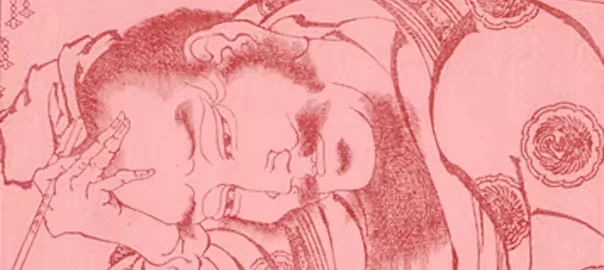
Hokusai - Confucius
The Chinese Confucian tradition of male ancestor worship reinforced the androcentrism and gender inequality inherited from Hindu tradition. Confucian values also led to the veneration of male Zen masters as ancestors. Even today, practices of differentiation and segregation between the sexes are pervasive in most Zen temples across Asia.
Zen Women - Grace Schireson - [Translated from English by the author]
Amnesia
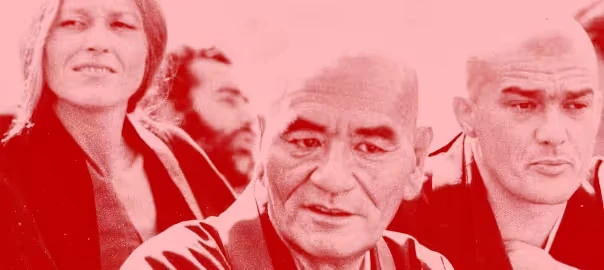
Taisen Deshimaru
Question Why have no women’s names been passed down in Zen?
Answer Women, just as much as men, have practiced Zen, and it has frequently happened that an elderly woman educated a master. However, in traditional Asia, it was customary not to transmit a woman’s name to posterity, even if she spread wisdom around her, even if she taught a master. Today, all that is over: women and men are on an equal footing, and a woman can very well become a master.
Taisen Deshimaru - The Practice of Zen - page 69
Parity

Stéphane Kosen Thibaut and Brigitte
Question Are there women among the masters?
Answer Today, in my sangha, there are six women masters and four men masters. Parity… […] Many women are less drawn to power. There are more power struggles among men. Besides, we live in a man’s world: there’s always war, and we’re fed up with it. Why don’t they listen a little to feminine wisdom? True feminine wisdom—not women who imitate men or women who adapt to a man’s world, but real women. That’s what we’re waiting for to save the planet.
— Master Kosen, Mondo, March 2016
Dogen brought back from China zazen, the heart of Zen. Spreading the seed of Zen in Japan, he left Kyoto in 1230 to escape the growing hostility of the Tendai school. In his teaching, he stood against all discrimination toward women in the practice of zazen.
In the Shobogenzo, Dogen opposes any position of inferiority that might be assigned to women. Japanese society at the time seemed relatively permissive. Yet certain chapters of The Treasury of the True Dharma Eye, deemed too revolutionary for the taste of the Buddhist clergy, were long censored. They circulated only as secret teachings, even though Zen rejects all esotericism!





Josy’s parallel commitments to Zen and feminism are therefore far from contradictory. They illustrate the universality of Zen Buddhism, even if her relationship with Master Deshimaru was at times somewhat… let’s say, rough. For in his seminal work, Dogen is crystal clear: following the Way is not the exclusive preserve of men.
Essence

Hokusai - manga
Those who have not even dreamed of seeing the essence of the Buddha’s Way, even if they are centenarian elders, are far inferior to anyone, man or woman, who has attained the Dharma.
Dogen - Raihai-tokuzui - 1240 - Cited in Three Zen Lessons, Gallimard - Translation by Janine Coursin
Beyond
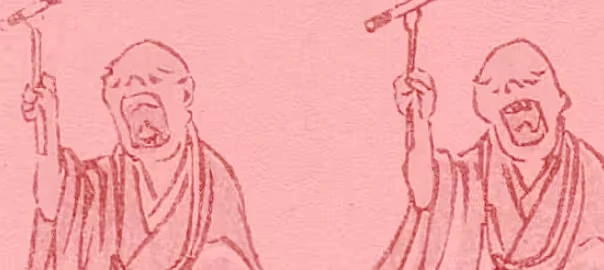
Hokusai - manga
In truth, [the nun Myōshin] was beyond the three degrees of wisdom and the ten degrees of sanctity, and this act of Awakening was that of a direct successor to the buddhas and patriarchs. This is why, nowadays, when the position of superior or deputy superior in a temple is vacant, a nun who has attained Awakening should be appointed. Even if he is an elder with many years of practice behind him, a monk who has not attained Awakening is of no use.
Dogen - Raihai-tokuzui - 1240 - Cited in Three Zen Lessons, Gallimard - Translation by Janine Coursin
Principle
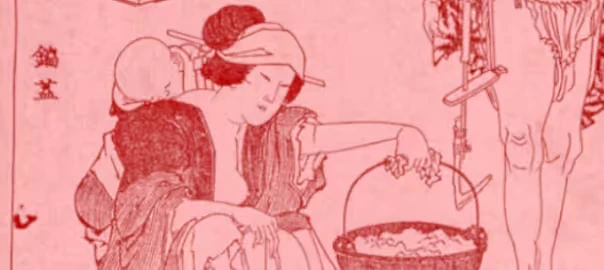
Hokusai - manga
Why should man be more precious than woman? Emptiness is emptiness, the four elements are the four elements, the five aggregates are the five aggregates. It is the same for man and woman, and both can attain Awakening. This is why both should be respected and honored when they have attained the Dharma, without arguing over whether they are man or woman. Such is the principle of the supreme and wondrous Buddhist Way.
Dogen - Raihai-tokuzui - 1240 - Cited in Three Zen Lessons, Gallimard - Translation by Janine Coursin
Children of the Buddha
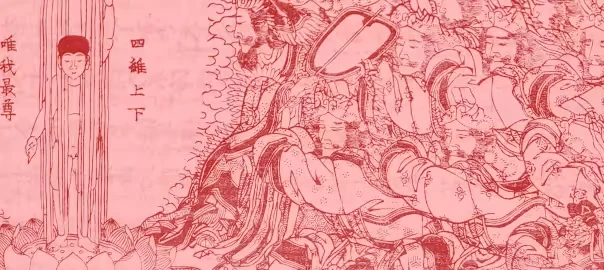
Hokusai - Birth of the Buddha
Foolish people regard women solely as objects of desire and treat them as such. The children of the Buddha should not be like this. If we exclude women because we see them as mere objects of desire, should we not also exclude men for the same reason? What is the fault of women, what is the virtue of men? There are unhealthy men and healthy women, healthy men and unhealthy women. The hope of hearing the dharma and leaving the household does not depend on being a woman or a man.
Dogen - Raihai-tokuzui - 1240 - [Translated from English by the author]
This at a time when the main branches of Buddhism cited being born a woman as one of the obstacles on the path to awakening. And while in Europe, a papal bull of 1233 laid the groundwork for the future witch hunts.
Zen, feminism, and all that jazz
Josy Thibaut was born a woman at the beginning of the 20th century. She lived through the darkest and most exhilarating periods of the “Century of Extremes.”
Her early love of jazz nearly got her into serious trouble. During an inspection, German soldiers of the occupying army found an album of “degenerate” music. Jazz was not yet banned, but after 1941 and the United States’ entry into the war, anything connected to American musicians was seen as subversive. Yet Josy, a swing enthusiast, found greater joy in the music of Black American players than in the French jazz of the time.



After the Liberation, she frequented the clubs of Saint-Germain-des-Prés assiduously. Jazz was still far from being used, as it is today, to lend a glamorous and consensual veneer to mass-market products. A music of rebellion, it united impoverished youth and intellectuals. From anonymous students to Boris Vian or Simone de Beauvoir, all fervently communed around a music brought by musicians fleeing the institutionalized racism of their homeland.
Rebellion

Robert Doisneau - Le Tabou, Paris 1947
For the first time in the history of French society, the older generation had nothing left to say; after 1945, we told them:
With the mess you got us into in 1939-40, shut up—now it’s our turn to play; for this, jazz was a formidable means…
Cited by Ludovic Tournès - New Orleans sur Seine, page 345
Antiracism

Boris Vian
At Jazz Hot, racism had a dedicated opponent in Boris Vian, a member of the Ligue internationale contre le racisme et l’antisémitisme, who regularly referenced the situation of Black people in the United States in his press reviews, occasionally slipping in remarks about racism in France, particularly during the Algerian War.
Ludovic Tournès - New Orleans sur Seine, page 347
Masculinity

Domestic Science School of the Société métallurgique de Normandie, 1981.
The French public […] adopted the sexual stereotypes that had emerged in the early days of jazz in the United States. In doing so, it reinforced its identification with a masculinity that denied women equal opportunities as musicians, critics, and fans. French women were expected to buy products meant to support their families and improve their standard of living, not jazz records or concert tickets, which remained the preserve of young men.
Jazz and Postwar French Identity - Elizabeth Vihlen McGregor - [Translated from English by the author]
In the 1950s, the French jazz audience, though a minority within the population, was spread across the country. It was distinctly young, male, educated, and—relatively—antiracist.
Josy’s husband, Gilles Thibaut, accompanied Sidney Bechet on trumpet at the Vieux Colombier club, a temple of the New Orleans style.
Personal and Collective Practices
If one had to find a coherence among Josy’s three passions—feminism, Zen, and jazz—it might lie in a practice that was both personal and collective. From militant activism in a movement without structure or hierarchy, to the rigorous practice of a meditative posture maintained without interruption for 2,500 years, to a music that emphasizes improvisation within small ensembles.
Social, Political, and Spiritual Emancipation
More deeply, Josy never compartmentalized the different aspects of her activism. Those who knew her can attest to how wholeheartedly she lived!
Like the MLF, for whom the personal is political
, she may have always been guided, in her various commitments, by an indomitable will for emancipation—on all levels, without separation.
Josy Thibaut began zazen and activism in a second youth from which she never emerged. She fought for women without reducing herself to her status as a woman. She advanced the causes she championed without rejecting anyone, but by challenging an unjust system of values. Without betraying herself, without compromise, she practiced and shared the posture of zazen tirelessly, beyond any selfish consideration.
Beyond Gender
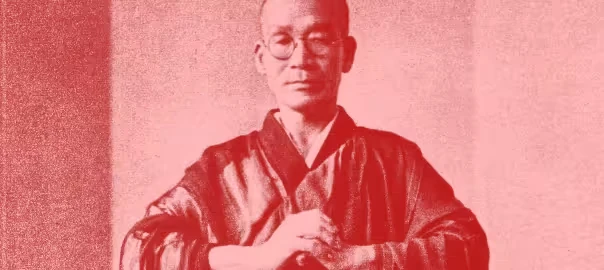
Kodo Sawaki
What sets you apart from the Buddha? It’s what you carry within you! Men think they are
men, women think they arewomen. That is the root of illusion! […] Look at things from the point where you have forgotten everything: wealth and poverty, and all human scales of value. If you succeed in this, a thousand saints will not equal you. Ceasefire! Forget everything! Man, forget your masculinity! Woman, forget your femininity!
Kodo Sawaki
Throughout her life, Josy worked for the social, political, and spiritual emancipation of all beings, regardless of their gender, faith, sexual orientation, or skin color. Beyond their contingent determinations.
This is how the children of the Buddha should be.
Olivier C
Proofreading and advice: Anne, Angela, and Isabelle
Sources
Hokusai - manga
- Feminism
- Japan
- Buddhism
- The Essential Dogen: Writings of the Great Zen Master
- The Vimalakirti Sūtra
- Sit: Zen teachings of master Taisen Deshimaru – Philippe Coupey
- Sa véritable dimension – Maître Kosen
- The Lotus Sūtra
- El zen es la mayor patraña de todos los tiempos – Kodo Sawaki
- Women in Buddhism – Diana Y. Paul
- Zen Women – Grace Schireson
- Kyaiktiyo Pagoda
- Jazz